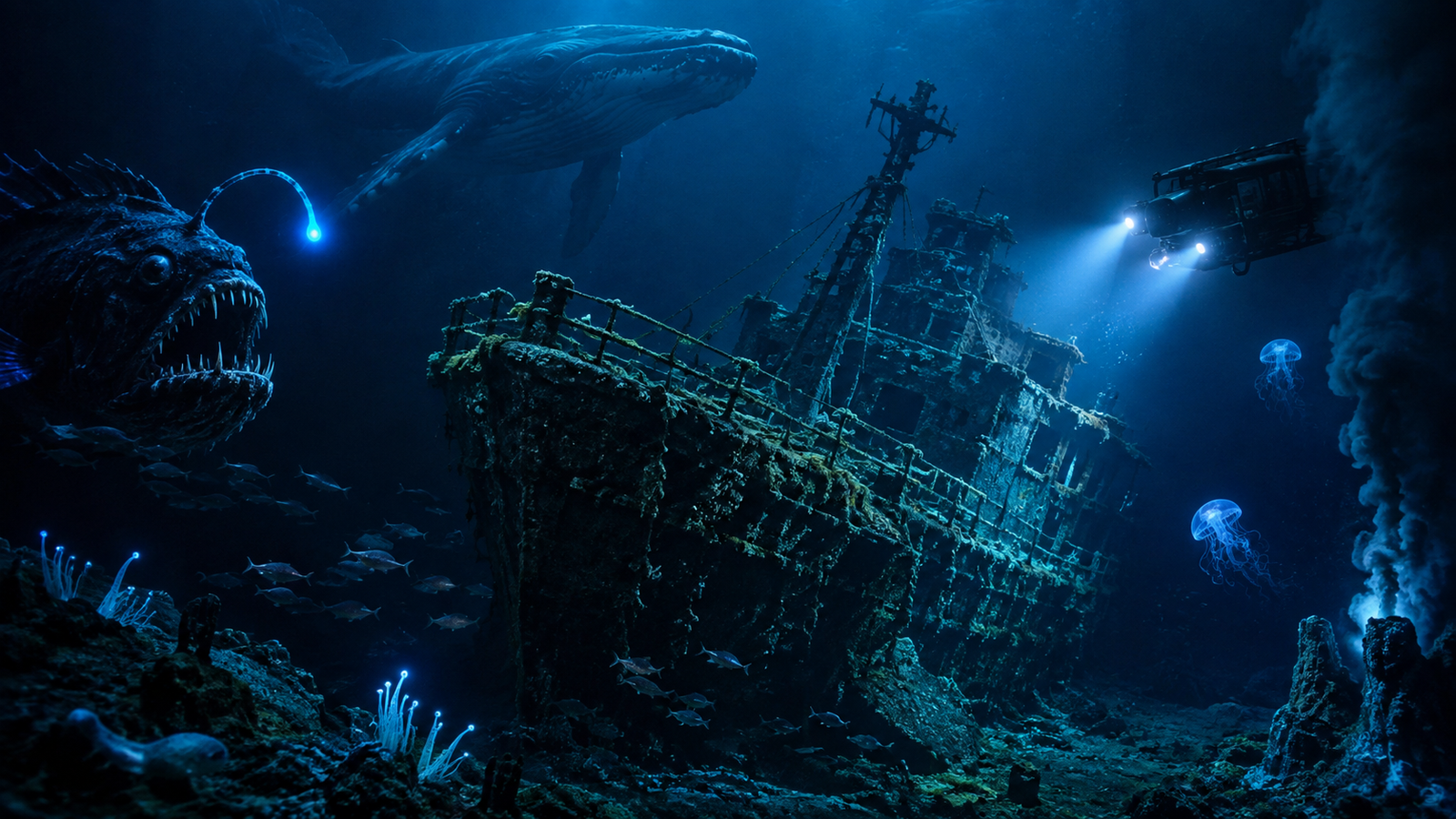
The shipwrecks in the ocean tell some of the most fascinating stories hidden beneath the surface of our planet. Thousands of vessels have disappeared into the sea throughout history, leaving behind mysterious underwater sites that continue to attract explorers, researchers, divers, and marine enthusiasts. Resting on the ocean floor, these sunken ships are slowly transformed by nature as marine organisms make their homes around the wreckage. In some locations, massive whales and other marine animals pass through these underwater environments, creating a remarkable connection between human history and the natural world.
The ocean covers most of Earth’s surface, yet much of its underwater environment remains unexplored. Beneath the waves are enormous landscapes, deep trenches, coral ecosystems, unusual marine species, and countless underwater shipwrecks. Some wrecks are located relatively close to the surface, while others rest at extreme depths where sunlight cannot reach. These forgotten vessels provide an opportunity to understand history while also revealing how powerful and adaptable ocean ecosystems can be.
What Happens When a Ship Sinks in the Ocean?
When a ship sinks, its journey does not necessarily end. After reaching the seafloor, the vessel becomes exposed to currents, pressure, saltwater, sediment, and marine organisms. Over time, these natural forces begin to change the structure of the ship.
Metal surfaces may corrode, wooden components may deteriorate, and sediment can gradually cover parts of the vessel. At the same time, marine organisms begin attaching themselves to the wreck. Small organisms may colonize the surface first, followed by larger species that use the wreck as shelter.
This process can transform a sunken ship into an artificial reef. Open rooms, corridors, damaged sections, and gaps within the structure can provide protected spaces for fish, crustaceans, and other marine life. What was once a human-made transportation system can eventually become an important part of the underwater ecosystem.
Why Are Underwater Shipwrecks Important?
Underwater shipwrecks are valuable for several reasons. They can provide historical information, archaeological evidence, and habitats for marine organisms. Researchers can study the construction of old vessels, investigate their cargo, and examine evidence that may explain how they sank.
Some wrecks are also important because they support marine ecosystems. Fish can use them for shelter, while corals, sponges, algae, and other organisms can grow on their surfaces. In areas where natural reef structures are limited, wrecks can become important habitats.
Shipwrecks therefore represent two different stories at the same time. They are reminders of the human activities that took place on the ocean, but they also demonstrate the ability of nature to reclaim and transform human structures.
The Mysterious World of the Deep Ocean
The deep ocean is one of the most extreme environments on Earth. As depth increases, sunlight gradually disappears and water pressure becomes much greater. Temperatures can also become extremely cold, creating conditions that are difficult for humans to experience directly.
Despite these challenges, marine life has adapted to almost every part of the underwater world. Some deep-sea creatures have developed unique bodies, feeding strategies, and behaviors that allow them to survive in darkness and high pressure.
This makes exploring the deep ocean similar to discovering another world. The environment can appear unfamiliar, mysterious, and almost alien. Hidden within this darkness are shipwrecks, geological formations, and species that continue to fascinate scientists.
When Whales Pass Through Shipwreck Sites
One of the most dramatic images in the ocean is a whale swimming near a shipwreck. A large whale moving beside a sunken vessel creates an extraordinary contrast between human engineering and natural power.
Whales are among the largest animals on Earth. Depending on the species, they can reach enormous sizes and travel across vast areas of the ocean. Their movements connect different marine environments and contribute to the complex ecosystems of the sea.
Seeing a whale near an underwater wreck also changes our perception of scale. A ship that once appeared enormous to humans can seem surprisingly small beside a giant marine animal. The scene represents two different aspects of the ocean: the history humans have left behind and the living world that continues to evolve beneath the waves.
Shipwrecks Become Homes for Marine Life
One of the most interesting aspects of sunken ships is their ability to attract marine life. Once a vessel settles on the seabed, its structure can create hiding places and surfaces for organisms to colonize.
Fish may swim through broken windows, corridors, and open sections of the wreck. Smaller creatures can hide within cracks and protected spaces. Marine plants and organisms may cover exposed surfaces, gradually changing the appearance of the vessel.
Over many years, a wreck can become difficult to recognize as a former ship. Instead, it may appear as a natural-looking underwater habitat filled with marine organisms.
This transformation demonstrates the remarkable ability of nature to adapt to human-made environments.
How Shipwrecks Help Us Understand History
Every shipwreck has a story. Some vessels disappeared during storms, while others were involved in collisions, accidents, military conflicts, or mechanical failures. Discovering and studying these wrecks can help researchers reconstruct events from the past.
Archaeologists may examine the structure of the vessel, its cargo, equipment, and surrounding debris. These details can provide information about how the ship was built, where it may have been traveling, and what happened before it sank.
Personal belongings can sometimes provide an even more human perspective. Objects left behind can reveal information about the people who traveled or worked aboard the vessel.
For this reason, shipwreck exploration is not simply about finding old ships. It is also about preserving and understanding human history.
Exploring Shipwrecks With Modern Technology
Modern technology has made ocean exploration safer and more detailed than ever before. Researchers can use sonar, remotely operated vehicles, autonomous underwater vehicles, underwater cameras, and advanced mapping systems to investigate wreck sites.
Remotely operated vehicles are particularly useful in deep water because they can reach environments that would be extremely dangerous for human divers. High-resolution cameras can capture detailed images, while sonar systems can map structures hidden beneath sediment.
These technologies allow researchers to study underwater shipwrecks while reducing physical disturbance to the site. Instead of removing everything from the ocean floor, researchers can document the wreck and understand its environment in its original location.
Protecting Underwater Shipwrecks
Although shipwrecks can be fascinating places to explore, they should also be treated with care. Many wrecks have historical, archaeological, or environmental significance. Uncontrolled diving, removal of artifacts, or physical damage can permanently destroy valuable information.
Responsible ocean exploration focuses on documentation, research, conservation, and education. Protecting underwater sites ensures that future generations can continue learning from them.
The same principle applies to marine life. Whales and other large animals need healthy ocean ecosystems to survive. Reducing pollution, protecting habitats, and supporting responsible marine practices can help preserve the underwater world.
Why the Ocean Still Feels Mysterious
Despite advances in technology, the ocean remains one of Earth’s greatest mysteries. Its enormous size, extreme depths, and difficult conditions make complete exploration almost impossible.
There may still be undiscovered shipwrecks resting beneath the waves. There may be marine species that scientists have never documented. There may be underwater landscapes that have never been observed directly.
This uncertainty is what makes the ocean so compelling.
A shipwreck lying silently on the seabed can represent a historical mystery. A whale moving through the surrounding darkness represents the continuing story of marine life. Together, they create a powerful reminder that the underwater world is both a record of the past and a living environment.
The Connection Between Humanity and the Ocean
Human civilization has depended on oceans for thousands of years. Ships have carried people, goods, cultures, and ideas across the world. Trade routes connected distant civilizations, while explorers used ships to reach new territories.
But the ocean has always been more than a transportation route.
It is home to enormous ecosystems and countless marine species. When a ship sinks, it becomes part of this environment. Its human story eventually becomes connected with the natural story of the ocean.
That connection is what makes shipwrecks in the ocean so fascinating. They show how human history and natural processes can exist in the same place.
Discover the World Beneath the Waves
The ocean is filled with stories that cannot be seen from the surface. Beneath calm waves are forgotten vessels, mysterious landscapes, marine ecosystems, and some of the largest animals on Earth.
A sunken ship may begin as a symbol of tragedy or loss, but over time it can become a habitat for marine life and an important historical site. A whale swimming through the same environment reminds us that the ocean continues to evolve long after human stories have ended.
DROWNED explores this hidden world—the forgotten ships, mysterious depths, marine giants, and stories beneath the waves. It is an invitation to look beyond the surface and discover an environment where history and nature exist together.
The surface of the ocean is only the beginning. Below it lies a world of darkness, discovery, shipwrecks, marine life, and giants waiting to be explored.
Frequently Asked Questions
What are shipwrecks in the ocean?
Shipwrecks in the ocean are vessels that have sunk and come to rest on the seabed. They can result from storms, collisions, accidents, warfare, mechanical failures, or other events.
Do shipwrecks attract marine life?
Yes. Shipwrecks can provide shelter, surfaces, and habitats for fish, corals, sponges, crustaceans, and other marine organisms. Over time, some wrecks can function like artificial reefs.
Can whales swim near shipwrecks?
Yes. Whales travel across large areas of the ocean and may pass through areas where shipwrecks are located. Their presence depends on the whale species, habitat, food availability, and location.
Why are shipwrecks important?
Shipwrecks can provide valuable historical and archaeological information while also supporting marine ecosystems. They can help researchers understand past events and how marine life interacts with human-made structures.
How are deep-sea shipwrecks explored?
Researchers can use sonar, remotely operated vehicles, autonomous underwater vehicles, underwater cameras, and other specialized technologies to locate, map, and study deep-sea shipwrecks.
Why is the deep ocean difficult to explore?
The deep ocean presents challenges such as extreme water pressure, darkness, cold temperatures, great distances, and difficult operating conditions. Specialized equipment is often required to explore these environments safely.